Unveiling the Paradigm Process: A Journey from Personality to Spirit
The ultra modern scientific, psychological and spiritually based Paradigm Process 10 step addiction treatment program offers a profound and comprehensive framework for addiction treatment, viewing recovery not merely as abstinence, but as an inner transformation from a personality-driven existence to a spiritual reality. Rather than applying superficial solutions, this model addresses the root causes of addiction, which are often found in deep-seated fear, unmet emotional needs, and ego-driven defence mechanisms.
Shifting from Fear to Love
At the core of the Paradigm Process is a fundamental paradigm shift from fear and the unconscious to love consciousness. The model posits that addiction is a manifestation of fear, and because fear is “based on nothing,” it can only be surrendered rather than fought. By cultivating love—the most powerful force in the universe—the cravings and fears associated with addiction begin to dissolve, following the principle that perfect love casts out all fear. Whether you attend a luxury rehab centre or an alternative to a rehab centre or a silent retreat, or buddist temple fo rthat matter as many people do, you still need a program of recovery. Your thinking, not just your ‘drinking’ is the issue. One of the best addiction treatment centres in the world puts it this way, “Whenever you are inauthentic fear is the cause and pain is the result…a program of truth will set you free once and for all”.
Dissolving Ego Insurgents
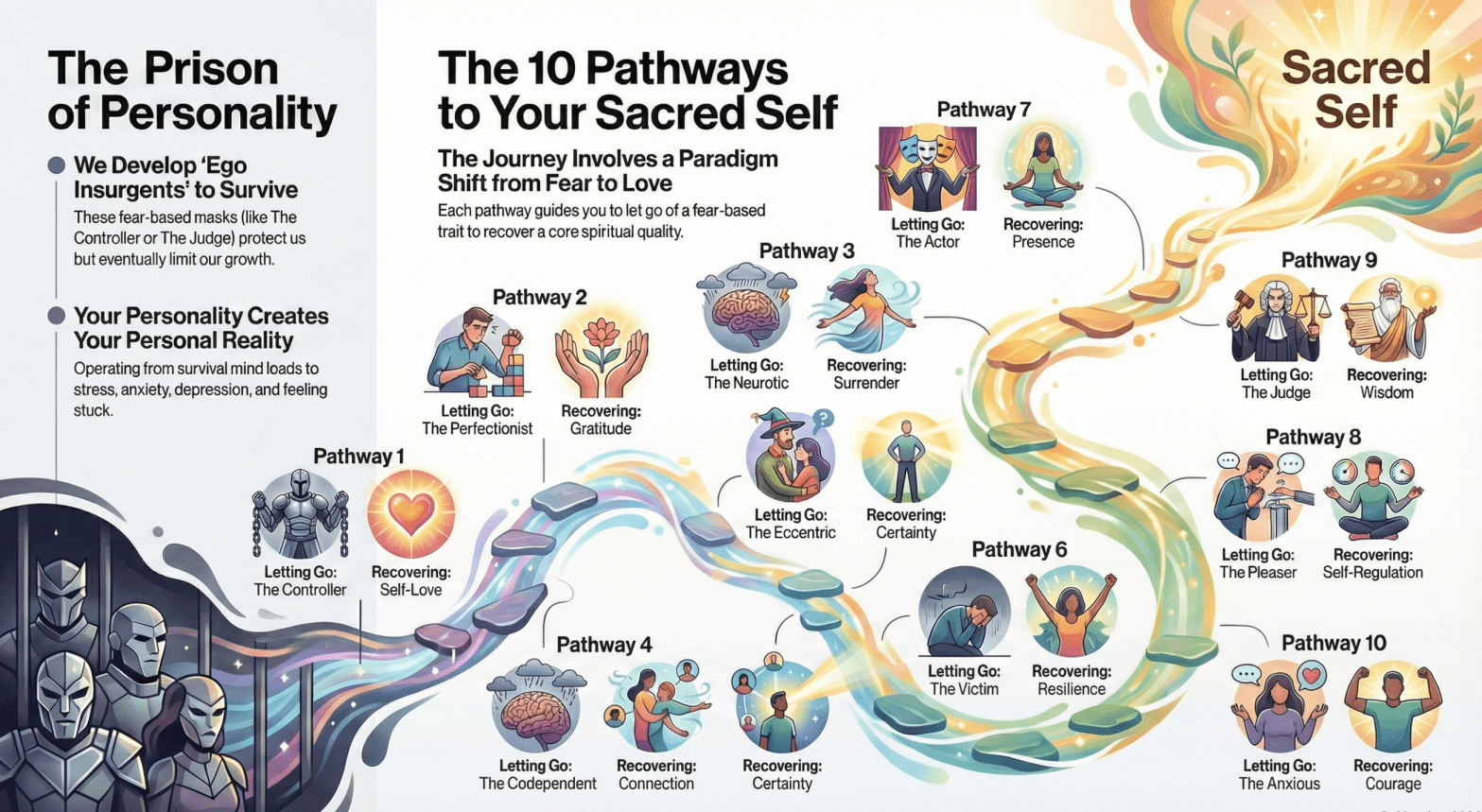
The process identifies that individuals develop “masks” or ego insurgents—such as The Controller, The Perfectionist, and The Victim—to survive childhood stress and trauma. While these traits once served a survival purpose, they eventually become “egoic defenses” that stifle growth and lead to the “prison of personality”. The Paradigm Process aims to “de-mask” these personas, allowing the individual to liberate themselves from the outdated operating system of the survival mind.

The Power of Contemplative Intelligence (CQ)
A unique feature of this model is its focus on Contemplative Intelligence (CQ), a neurobiologically grounded program designed to alter brain chemistry. By practicing “meta-thinking”—the ability to observe one’s own thoughts—individuals can shift their brain activity from the reactive limbic system to the prefrontal cortex, where creativity and true potential reside. Research within the program suggests that self-regulation consistently yields superior outcomes compared to external medication for long-term healing.
The 10 Pathways to the Sacred Self
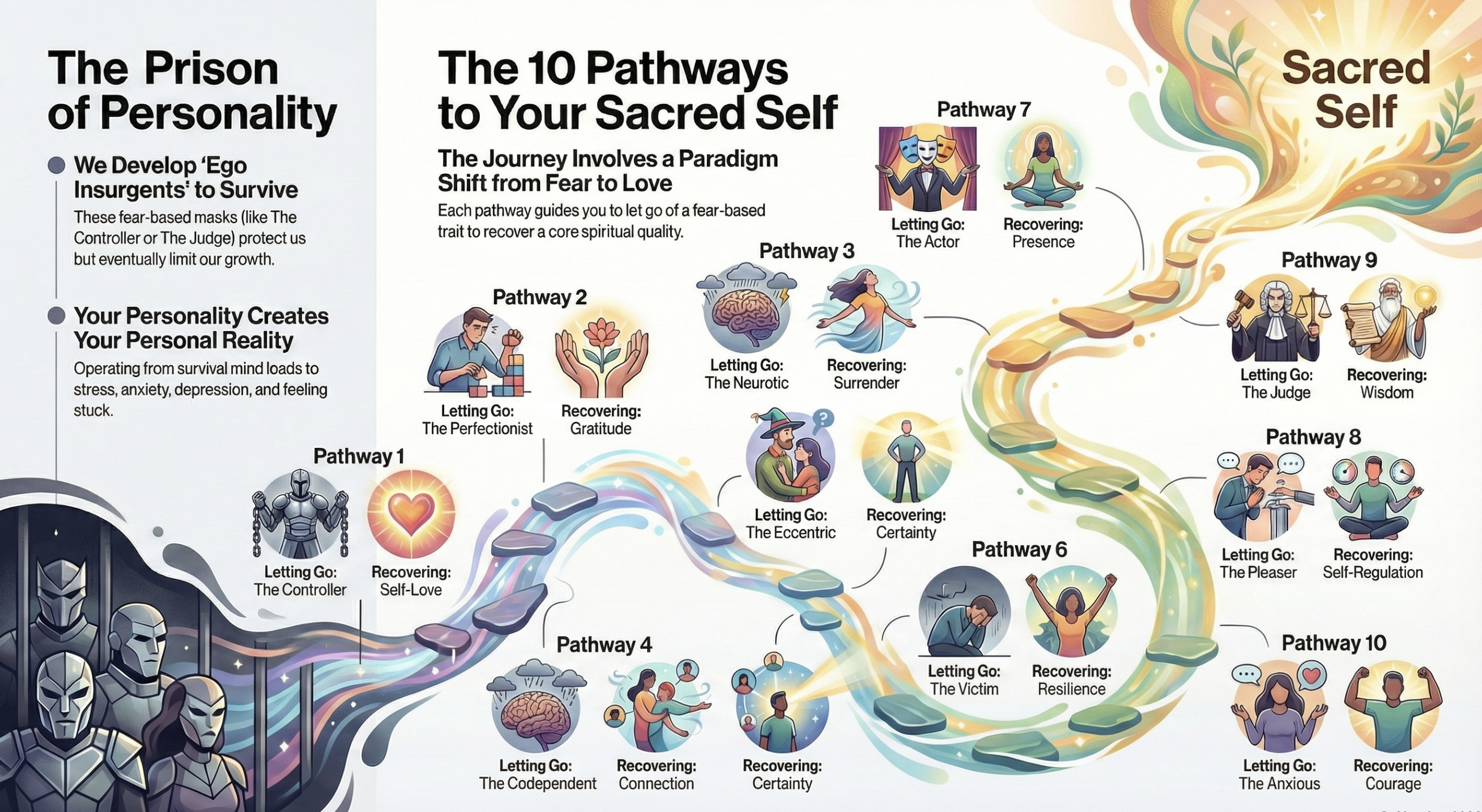
The recovery journey is structured through 10 Pathways, each involving the letting go of a specific ego insurgent to recover a core spiritual quality:
1. Letting go of The Controller to recover Self-Love.
2. Letting go of The Perfectionist to recover Gratitude.
3. Letting go of The Neurotic to recover Surrender.
4. Letting go of The Codependent to recover Connection.
5. Letting go of The Eccentric to recover Certainty.
6. Letting go of The Victim to recover Resilience.
7. Letting go of The Actor to recover Presence.
8. Letting go of The Pleaser to recover Self-Regulation.
9. Letting go of The Judge to recover Wisdom.
10. Letting go of The Anxious to recover Courage.
——————————————————————————–
Recovery Models: SMART vs. The Paradigm Process
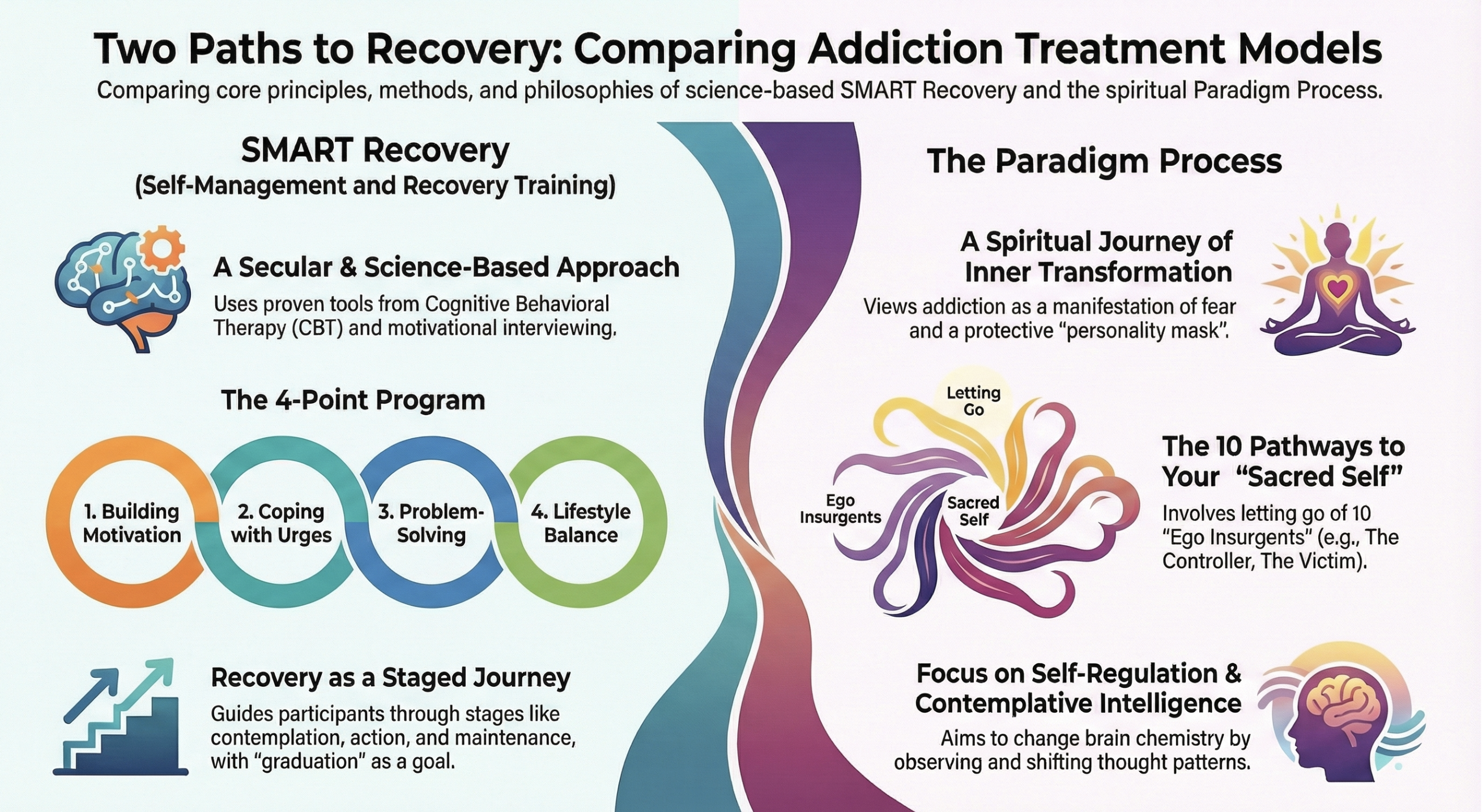
Choosing a recovery path often depends on whether an individual seeks a secular, psychological approach or a more spiritual, transformational journey. Here are some key differences between the SMART vs Paradigm Process Recovery models.
| Feature | SMART Recovery | The Paradigm Process |
| Core Philosophy | Secular and research-based mutual support. | Spiritual transformation from personality to “Sacred Self”. |
| Primary Tools | Uses CBT, REBT, and Motivational Interviewing. | Uses Contemplative Intelligence (CQ) and Loving Inquiry. |
| Framework | The 4-Point Program: Motivation, Urges, Problem Solving, and Balance. | The 10 Pathways: Dissolving ego insurgents to reclaim spiritual virtues. |
| View of Change | Recognizes six stages of change, from precontemplation to graduation. | Views recovery as a Paradigm Shift across the abyss from the known to the boundless. |
| Support Style | Peer support groups led by trained facilitators; medications welcomed. | Often practiced through inpatient clinics, retreats, and self-mastery. |
SMART Recovery focuses on Self-Management and Recovery Training, providing participants with a “toolbox” of scientifically grounded psychological techniques to manage problematic behaviors. It is an alternative or supplement to 12-step programs and emphasizes self-empowerment through practical problem-solving.
In contrast, the Paradigm Process seeks a deeper identity shift. It argues that “thinking well” from the perspective of the personality is insufficient; one must instead live from being. While SMART manages the symptoms and urges of addiction through cognitive tools, the Paradigm Process attempts to dissolve the very “shadow self” that creates the need for the addiction in the first place.
Conclusion: Beyond Survival
Ultimately, the Paradigm Process 10 step addiction treatment program is about moving from survival mind to thrive mind through 10 simple steps or pathways from a psychological, personality perspective to a spiritual, God centred and healed one. It teaches that you are not your story, your trauma, or your personality, but a divine, unlimited being capable of creating a new personal reality. By reclaiming your authentic power, you transition from a powerless victim to an empowered creator of your own life.
 Inpatient Treatment for Depression & Anxiety