
The Paradigm Process: A Journey to Lasting Addiction Recovery
The Paradigm Process offers a profound and comprehensive framework for addiction treatment, seeing it as an inner transformation from a personality-driven existence to a spiritual reality. It moves beyond superficial solutions to address the root causes of addiction, often found in fear, unfulfilled needs, and ego-driven behaviors.
How the 10-Step Paradigm Process Benefits Addiction Treatment
Shifting from Fear to Love
The core principle of the Paradigm Process is a paradigm shift from fear and the unconscious to love consciousness. Addiction is identified as a manifestation of fear and unfulfilled emotional needs. The process teaches individuals that “fear is based on nothing” and can “only be surrendered.” By cultivating love, described as the “most powerful and pervasive force in the universe,” fear and its associated cravings begin to dissolve. As the saying goes, “Perfect love casts out all fear.”
Addressing the Personality and Ego Insurgents
Addiction is directly linked to the “personality” or “masks” people create to protect themselves. These masks, referred to as “ego insurgents” like “The Controller,” “The Perfectionist,” and “The Neurotic,” serve survival behavior but ultimately hinder growth and cause suffering. The Paradigm Process aims to “de-mask” these personalities and “dissolve ego insurgents,” leading to the healing of “personality disorders” and liberating individuals from what once held them back. The removal of the mask is crucial for true transformation.
Focusing on Self-Regulation and Contemplative Intelligence (CQ)
The Paradigm Process emphasizes that self-regulation consistently demonstrates superior outcomes compared to external medication. Self-regulation includes the ability to “manage one’s own emotions and behaviors,” a skill often lacking in those struggling with addiction.
Contemplative Intelligence (CQ) is described as applying our “highest intellectual faculties” to change brain chemistry and rise above the “limitations of the limbic system (survival instincts)” to the prefrontal cortex, where true potential lies. It helps individuals to “think about their thinking with meta-cognition” and “dissolve false beliefs that cause pain and suffering,” essential for overcoming addictive behavior patterns and developing healthy coping mechanisms.
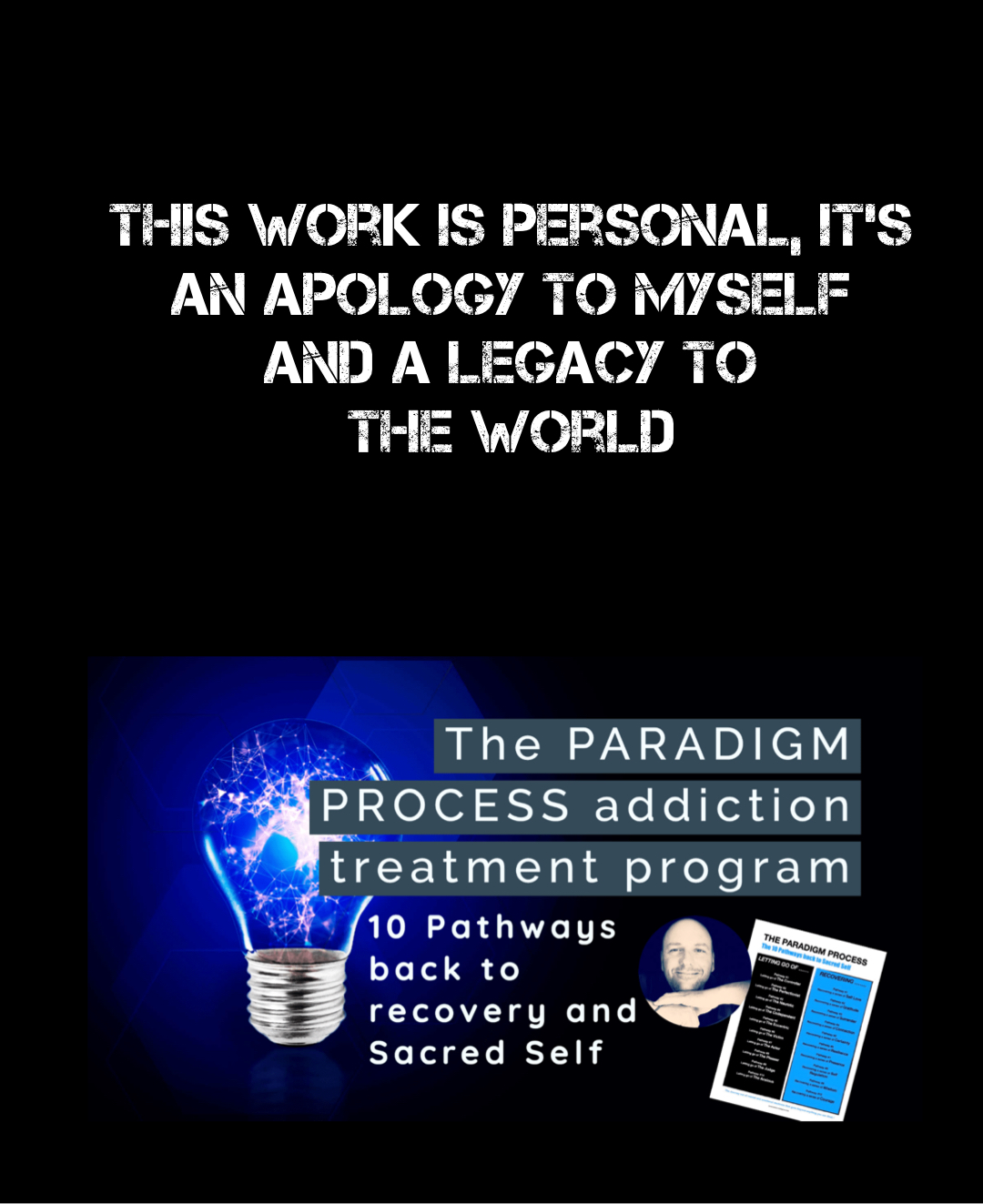
The 10 Pathways Back to the Sacred Self
Each of the 10 Pathways directly addresses underlying issues associated with addiction:
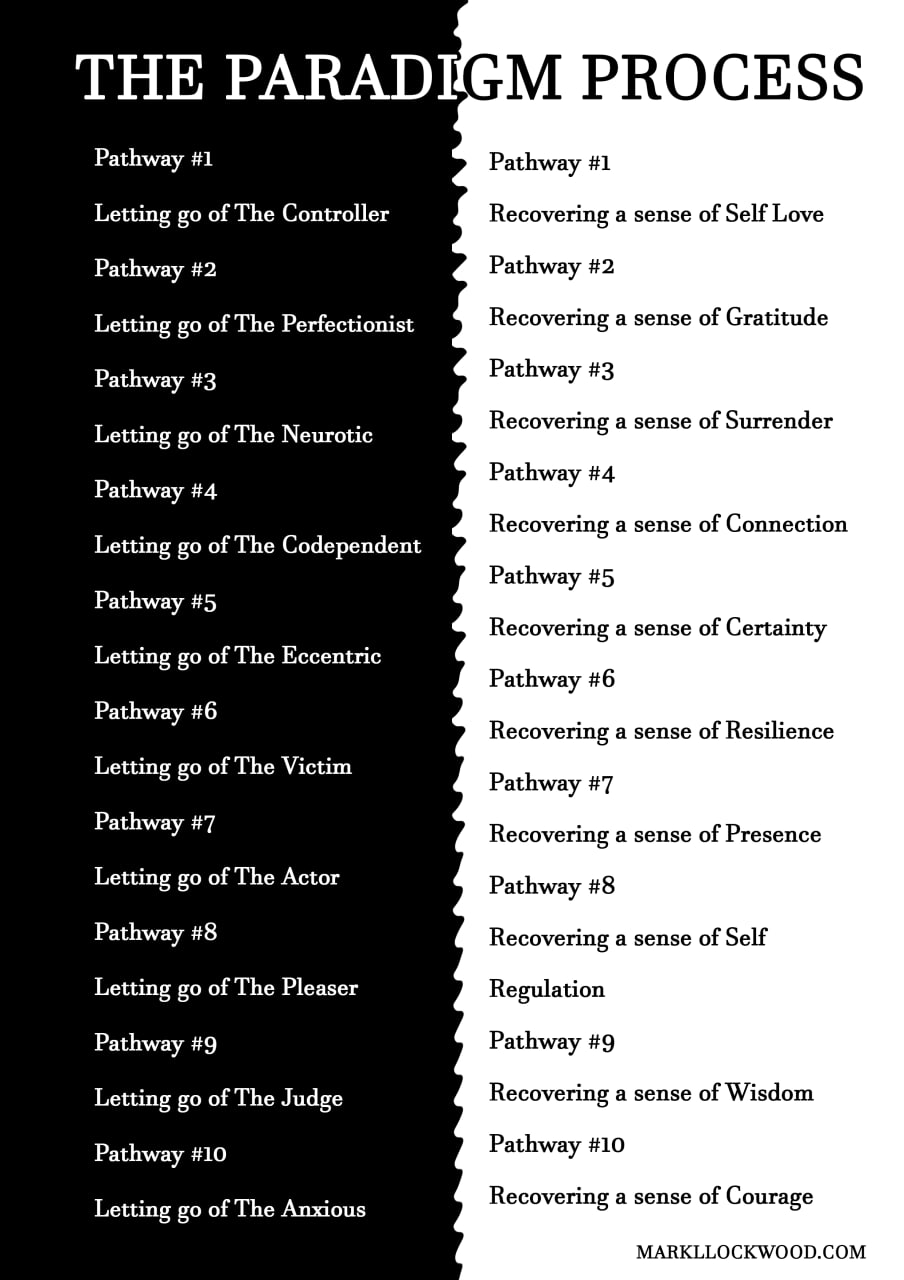
- Pathway #1: Letting go of The Controller / Recovering a Sense of Self-Love Addiction can be a way to maintain an illusion of control or manage fears and feelings of powerlessness. This pathway helps individuals cultivate self-worth and reduce dependence on external factors.
- Pathway #2: Letting go of The Perfectionist / Recovering a Sense of Gratitude Perfectionism, driven by a fear of failure, can lead to procrastination, self-criticism, and dissatisfaction common in addictive patterns. Gratitude, its opposite, shifts focus to what is good, promoting inner peace.
- Pathway #3: Letting go of The Neurotic / Recovering a Sense of Surrender Neurotic behavior, including overthinking, anxiety, worry, and obsessive thoughts and actions, is common in addicts. This pathway guides individuals to surrender to the flow of life and accept uncertainty, letting go of the urge to control.
- Pathway #4: Letting go of The Codependent / Recovering a Sense of Connection Codependency is specifically linked to addictions in “Double Winners.” This pathway enables individuals to set healthy boundaries and cultivate self-love, leading to authentic, healthy connections.
- Pathway #5: Letting go of The Eccentric / Recovering a Sense of Certainty Characterized by a deep fear of indifference and rejection, this ego insurgent leads to social isolation and avoidance. This pathway helps individuals embrace uncertainty and develop unwavering trust in life.
- Pathway #6: Letting go of The Victim / Recovering a Sense of Resilience A victim mentality, a “deeply ingrained belief of helplessness,” hinders the ability to make changes. This pathway helps individuals take responsibility for their actions and cultivate resilience to rise above adversity.
- Pathway #7: Letting go of The Actor / Recovering a Sense of Presence This pathway helps individuals let go of the need to “wear masks” and “put on a show” to meet external expectations. It leads to authentic self-expression and deeper connection with the present moment.
- Pathway #8: Letting go of The Pleaser / Recovering a Sense of Self-Regulation Driven by the need for external approval, the “Pleaser” can lead to burnout and suppression of one’s needs. Recovering self-regulation is crucial for breaking impulsive reactions and making healthy decisions.
- Pathway #9: Letting go of The Judge / Recovering a Sense of Wisdom This pathway helps overcome the “relentless internal critic” and the tendency to judge oneself or others. Wisdom offers insight, self-awareness, and humility, leading to deeper self-acceptance and liberation.
- Pathway #10: Letting go of The Anxious / Recovering a Sense of Courage Anxiety, often accompanying addiction, is characterized by hyper-vigilance and avoidance. This pathway fosters courage—the “unwavering willingness to act and move forward despite fear”—empowering individuals to confront addiction and embrace freedom.
Ultimately, the Paradigm Process aims to help individuals “unveil their authentic self” and “return to their roots of purpose, creativity, and fulfillment.” By doing this profound inner work, the “unspeakable power” addiction holds is “softened and dissolved,” transforming individuals from “powerless victims to empowered creators of their own lives.” This approach focuses on shifting from a survival-based mindset to one where we truly thrive, undoing the belief that “you are a separate self, a personality that needs to improve to be worthy.”
Tags: #AddictionRecovery #ParadigmProcess #InnerTransformation #SelfLove #EgoInsurgents #SelfRegulation #ContemplativeIntelligence #AddictionTreatment #MentalWellness #SpiritualAwakening
 Inpatient Treatment for Depression & Anxiety